
The usual process for bilingual social is to write the English post, approve it, then send it to a translator. The Arabic that comes back is accurate. It is also, quite often, flat in a way nobody can point at.
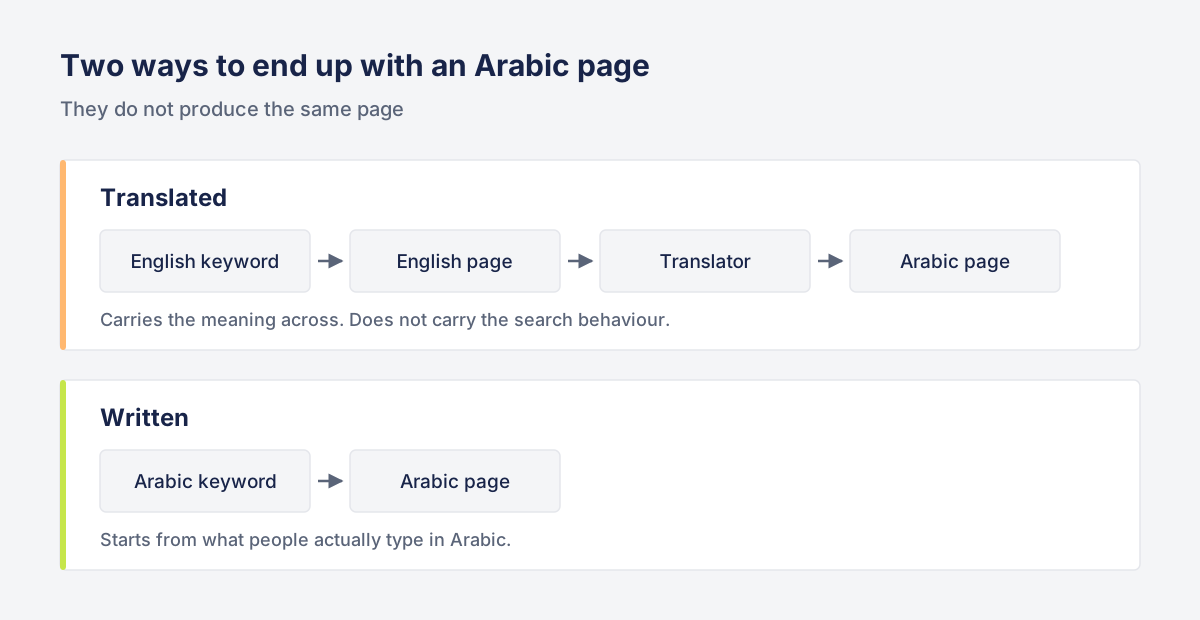
Translation preserves meaning, not effect
A caption has a job beyond being understood. It has to earn a pause in a feed, which depends on rhythm, on a familiar turn of phrase, on the way a question is framed. Those things do not survive translation because they were never in the words on their own. They were in the choice of words for that audience.
This is most obvious in the first line. English social copy often opens with a hook built around a contradiction. That structure can land awkwardly in Arabic, where a direct statement of the benefit frequently does more work. Translate the English hook and you get a sentence that is correct and inert.
The same problem in search
Search shows this even more clearly, because you can measure it. Arabic speakers often use different modifiers, different question forms and sometimes a completely different primary term for the same product. Keyword research has to run natively in each language rather than being derived from the English list. I wrote about that side separately in bilingual SEO is not translation.
What writing first looks like in practice
Start from the Arabic audience and the Arabic term, write the post in Arabic, then write the English version as its own piece rather than as a source text. The two say the same thing and share nothing at sentence level. It is slower for the first few weeks and stops being slower once the voice is established.
If comments and community replies are also going out in both languages, the same rule applies there. Replying in translated Arabic is more noticeable than posting in it. This is the approach behind the social media marketing work, and the search side sits on the SEO consulting page.