
Demand Gen replaced Google's old Discovery campaigns in 2024, and most advertisers in the GCC still haven't touched it. It runs across YouTube, the Discover feed, and Gmail from a single campaign, uses AI to build lookalike-style audiences automatically, and rewards video creative more than static images. For mobile-first, video-heavy markets like Kuwait, Saudi Arabia and the UAE, it's one of the more relevant formats to test right now — as long as you test it alongside Search and Meta rather than instead of them.
What Demand Gen actually is
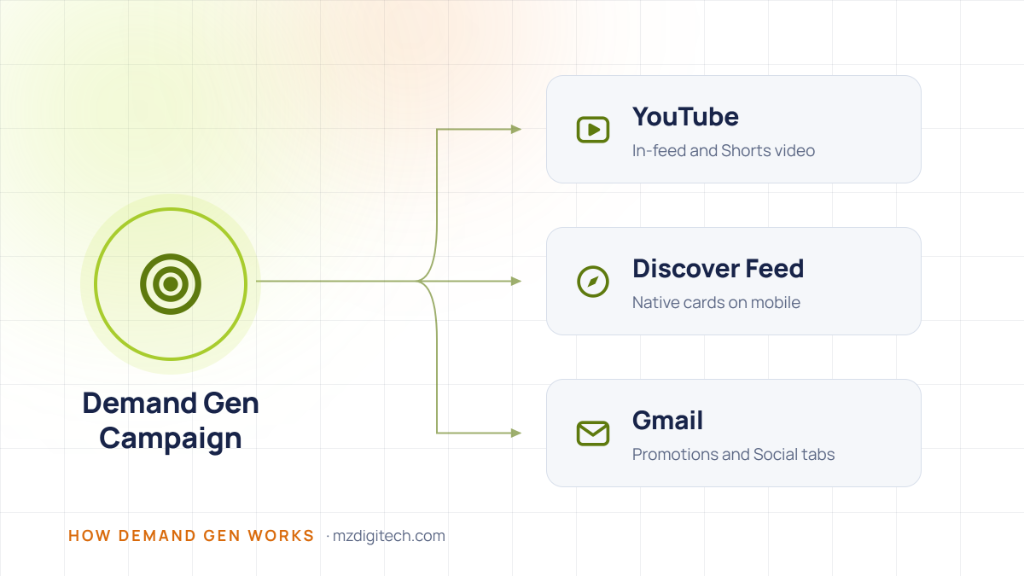
Demand Gen sits between Search and paid social. It's not intent-based like Search — you're not bidding on keywords — but it's not as broad as a pure awareness play either. It shows visually rich ads (image or video) across three of Google's highest-attention surfaces at once:
- YouTube — in-stream and in-feed placements
- Discover — the personalized feed many Android users scroll before opening any app
- Gmail — the Promotions and Social tabs
One campaign, one budget, one set of creative assets, spread automatically across all three.
What changed from Discovery
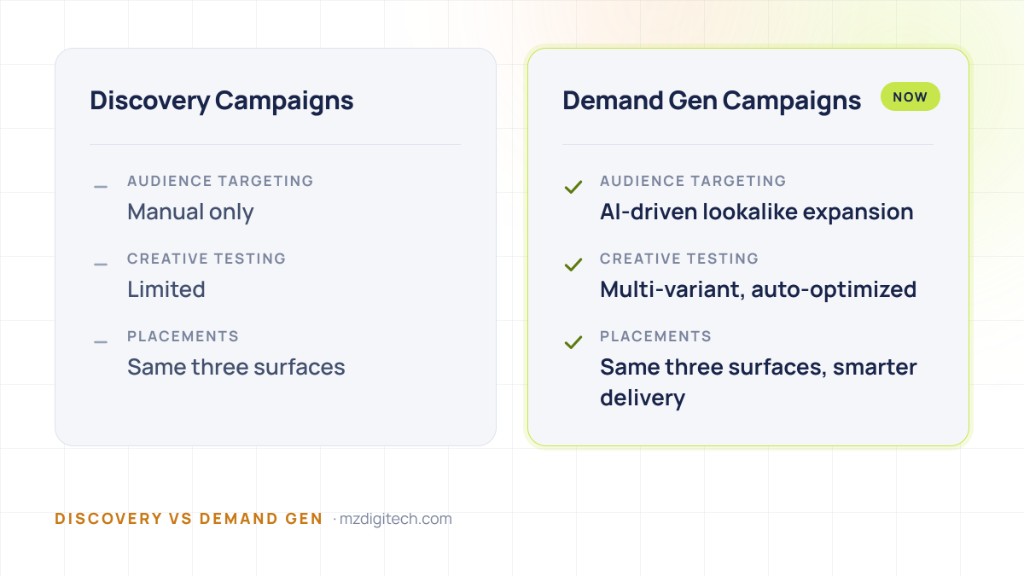
Discovery campaigns did something similar, but Demand Gen adds real targeting and optimization on top:
- AI-driven audience expansion that behaves like lookalike targeting, without you building the audience manually
- Better creative testing tools, including the ability to run multiple video and image variants and let Google's algorithm shift budget toward what performs
- Lookalike segments built from your existing customer lists or website visitors, refreshed automatically as the campaign learns
The placements are similar. The targeting and optimization underneath them are not.
Why this matters more in the GCC than it might elsewhere
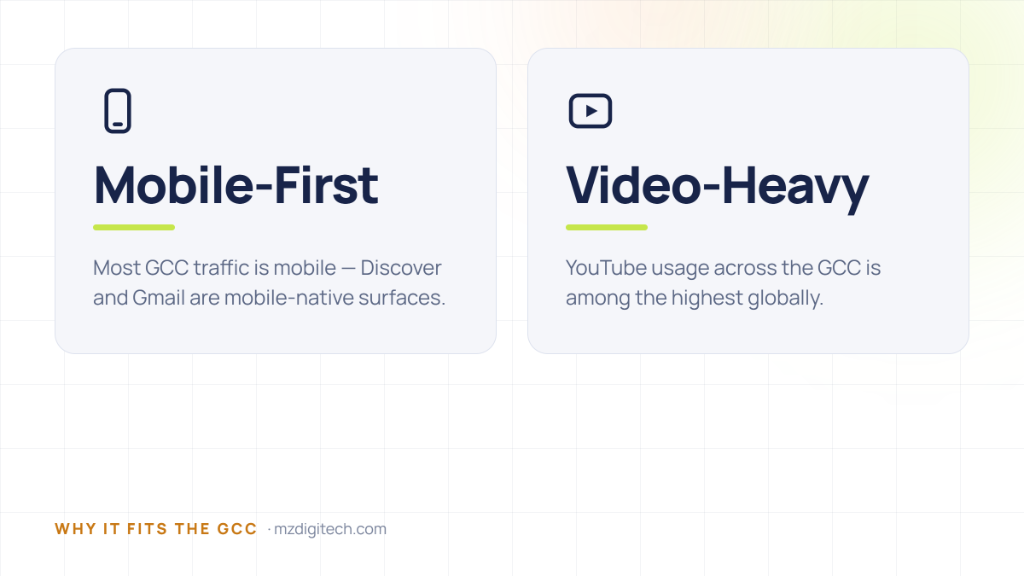
Two things make Demand Gen a better fit for Kuwait, Saudi Arabia, the UAE and the wider Gulf than for some other markets:
- Mobile-first browsing. A large share of traffic in the region is mobile, and Discover and Gmail are both mobile-heavy surfaces by default.
- High video consumption. YouTube usage across the GCC is among the highest globally, and Demand Gen's creative requirements lean video-first — which plays to that behavior rather than against it.
A static search ad can't reach someone scrolling their Discover feed. Demand Gen can.
How to test it without disrupting what's already working
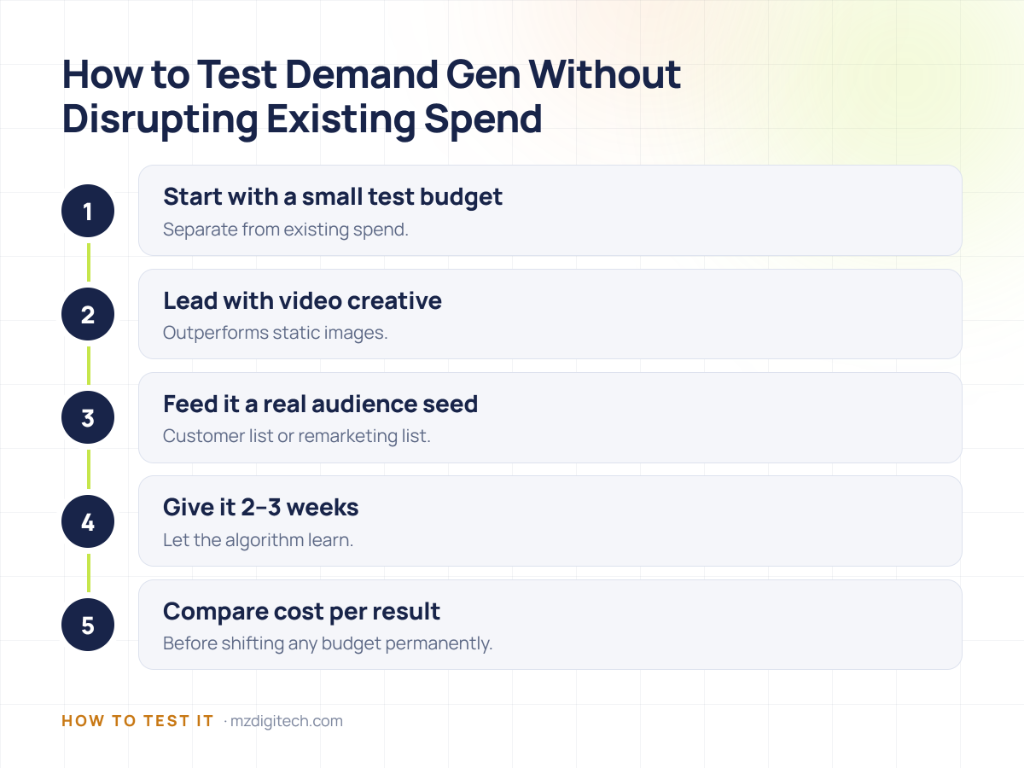
Don't reallocate budget from Search or Meta on day one. Instead:
- Start with a small, separate test budget — enough to get the algorithm real signal, not enough to matter if it underperforms.
- Lead with video. Even a simple 15–30 second vertical video will usually outperform a static image in this placement mix.
- Feed it a real audience seed — a customer list or site-visitor remarketing list — rather than letting it cold-start from nothing.
- Give it 2–3 weeks before judging results. Like most AI-driven campaign types, Demand Gen needs a learning period before performance stabilizes.
- Compare cost per result against your existing channels before shifting any budget permanently.
If you manage Google Ads campaigns already, Demand Gen is worth running as a parallel test rather than a replacement — it's additive reach, not a substitute for Search intent.
The takeaway
Demand Gen isn't a niche format — it's Google's answer to paid social, built on placements (YouTube, Discover, Gmail) that GCC audiences already spend heavy time in. The advertisers testing it now, with real video creative and a proper audience seed, are the ones who'll have the data to scale it before it becomes the default everyone's already doing.
For the technical setup, targeting options and current best practices, Google's own Demand Gen documentation is the most reliable source — check it before publishing, since Google updates these campaign types often.